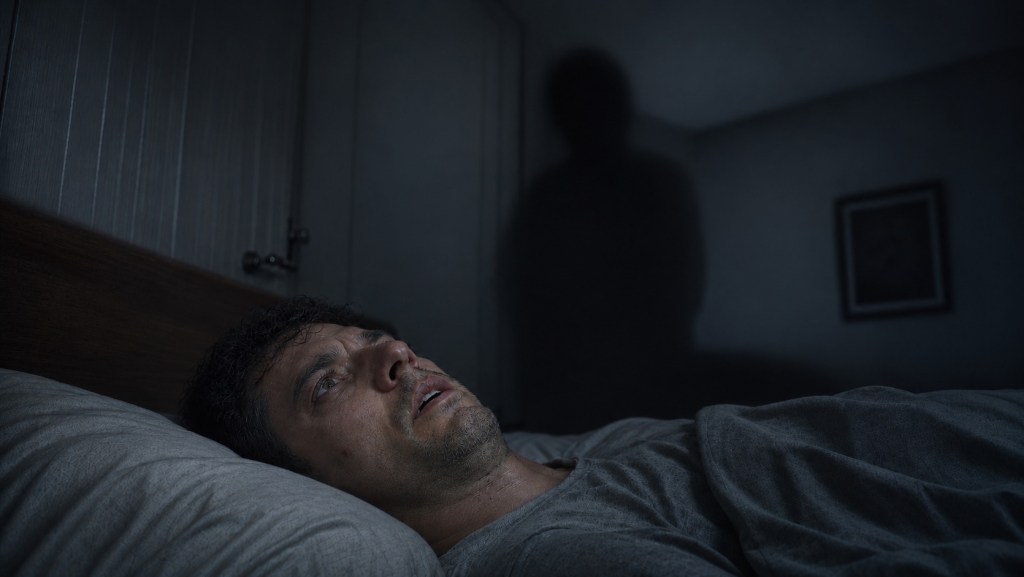
Imagine waking up in the middle of the night, only to discover that you can’t move. You try to lift your arms, turn your head or call for help, but nothing happens. Then comes the terrifying feeling that somebody else is in the room. You might even see a shadowy figure standing beside your bed.
For some people, this isn’t a scene from a horror film. It’s an experience known as sleep paralysis.
But here’s the curious thing. Although scientists have a fairly good understanding of why sleep paralysis happens, why does something as ordinary as waking up sometimes become such a frightening experience? And why do some people encounter terrifying figures while others experience nothing of the sort?
The good news is that sleep paralysis isn’t always frightening. Some people experience it without hallucinations or overwhelming fear. They simply find themselves temporarily unable to move. But the opposite is also true for others.
Intense terror, threatening figures and the sensation that something evil is nearby are commonly reported by people who experience sleep paralysis. Some accounts of alien abductions have been linked to the phenomenon, while others have interpreted their experiences as encounters with demons, incubi or even jinn in certain parts of the Middle East. Some people report an overwhelming conviction that somebody is standing beside their bed, even though they cannot actually see anyone.
Research has led to theories suggesting that dream imagery and the emotions we experience during sleep can sometimes carry over into wakefulness. So, it’s possible that someone experiencing sleep paralysis might already be frightened as they become conscious. But it’s important to understand that the relationship between fear, paralysis and hallucinations isn’t entirely understood.
Researchers have suggested that fear and dreamlike hallucinations can influence one another during sleep paralysis. In other words, the frightening experience might not simply be a reaction to the paralysis itself. The fear could also help shape what someone believes is happening around them.
But could the simple act of being unable to move be enough to trigger feelings of terror? Imagine suddenly finding yourself completely helpless, unable to defend yourself or even call out for assistance. It’s not difficult to understand why your mind might interpret the situation as dangerous, even when there is no actual threat.
Looking back through history, we can see that people have interpreted sleep paralysis through the beliefs of their time. Witches, demons and other supernatural beings have frequently been blamed for these frightening encounters. The similarities between accounts from different cultures are particularly interesting and might even offer clues to understanding the phenomenon. Do our expectations help shape the frightening stories that our minds create?
The good news is that if you’ve experienced sleep paralysis, it doesn’t always have to be something to fear. Understanding what’s happening can make the experience less frightening. During certain stages of sleep, our bodies temporarily prevent most voluntary muscle movement, and sleep paralysis occurs when this immobility continues briefly as we become conscious.
Although there is no guaranteed way to prevent sleep paralysis, maintaining a regular sleep schedule, getting enough rest and reducing sleep disruption may help lower the likelihood of experiencing it. Simply recognising what’s happening can also make an episode easier to cope with.
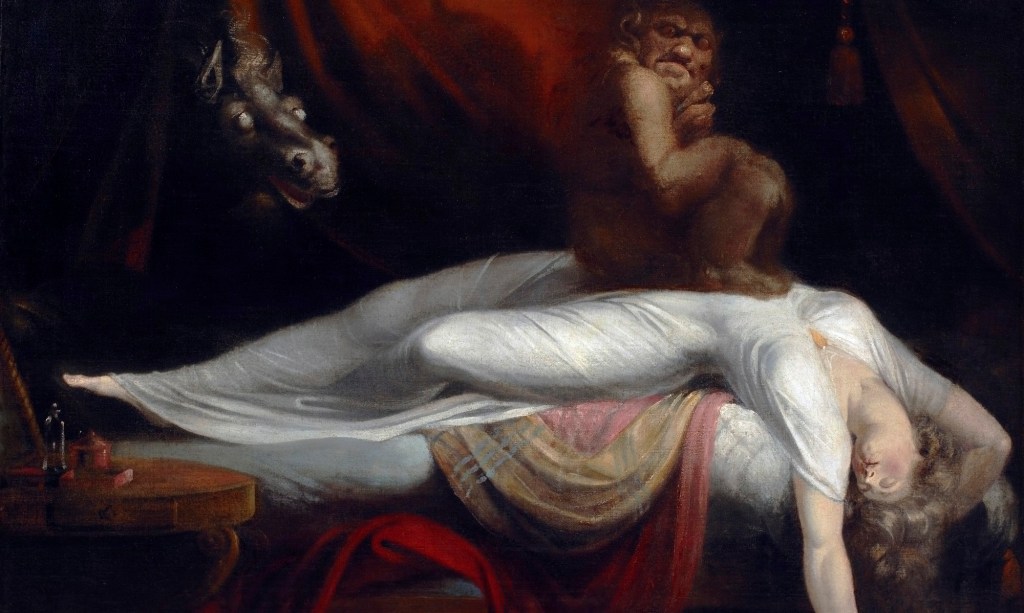
Interestingly, frightening experiences associated with sleep have inspired horror art for centuries. Henry Fuseli’s The Nightmare (1781) depicts a sleeping woman with an ominous-looking creature sitting on her body. Although the painting wasn’t necessarily intended to illustrate sleep paralysis, it bears a striking resemblance to accounts of the phenomenon. It’s a near-perfect example of how our fears surrounding sleep have found their way into art and folklore.
Perhaps the most unsettling thing about sleep paralysis isn’t the inability to move, but how easily our minds can turn an ordinary bedroom into something resembling a scene from a horror film. After all, if simply waking up can sometimes produce such terrifying experiences, what does that tell us about the power of our own minds?


Leave a Reply