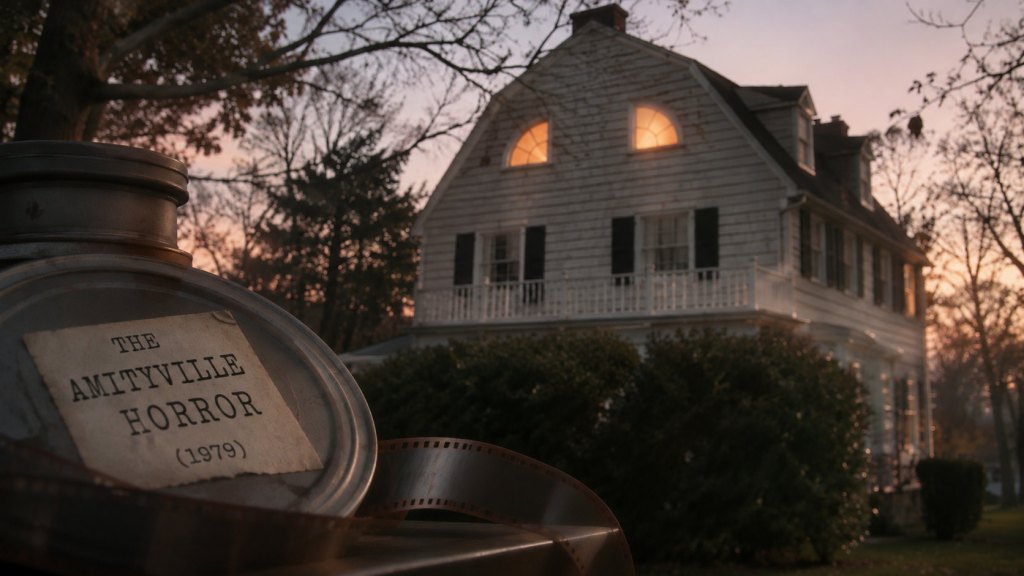
Imagine buying a house, settling into your new home and discovering that strangers have decided it’s a tourist attraction.
Some stop outside to take photographs. Others knock on your door, hoping for a glimpse of something supernatural. A few apparently think nothing of disturbing you in the middle of the night.
For the people who moved into the infamous Amityville house after the Lutz family, this wasn’t a fictional horror story. It was an unwanted consequence of living in one of America’s most notorious properties.
The ghosts may have been disputed, but the visitors were very real.
For those unfamiliar with the story, we have to go all the way back to 13 November 1974, when Ronald DeFeo Jr. brutally murdered six members of his family with a rifle. He was subsequently arrested, convicted and sentenced to six consecutive prison terms of 25 years to life.
Just over a year later, George and Kathy Lutz moved into the property with their three children. However, they fled after just 28 days, claiming that the house was haunted.
Their experiences inspired Jay Anson’s 1977 book The Amityville Horror, which was followed by a film adaptation in 1979. The film helped catapult the house, then known as 112 Ocean Avenue in Amityville, New York, to a kind of stardom of its own.
Whether the house was genuinely haunted remains a matter of debate, although the murders themselves are an established fact.
James and Barbara Cromarty purchased the property in 1977. Visitors reportedly knocked on their door at all hours, shouted abuse, stole decorations and disturbed their sleep. Their daughter Joyce also reportedly faced harassment at school because of where she lived.
In a 1978 Newsday interview, James Cromarty recalled being awakened by someone playing the military tune Taps on his lawn at approximately 3 a.m. Cromarty reportedly responded with humour, applauding the visitor from his window.
It’s an amusing anecdote, but it also illustrates just how absurd the intrusions had become.
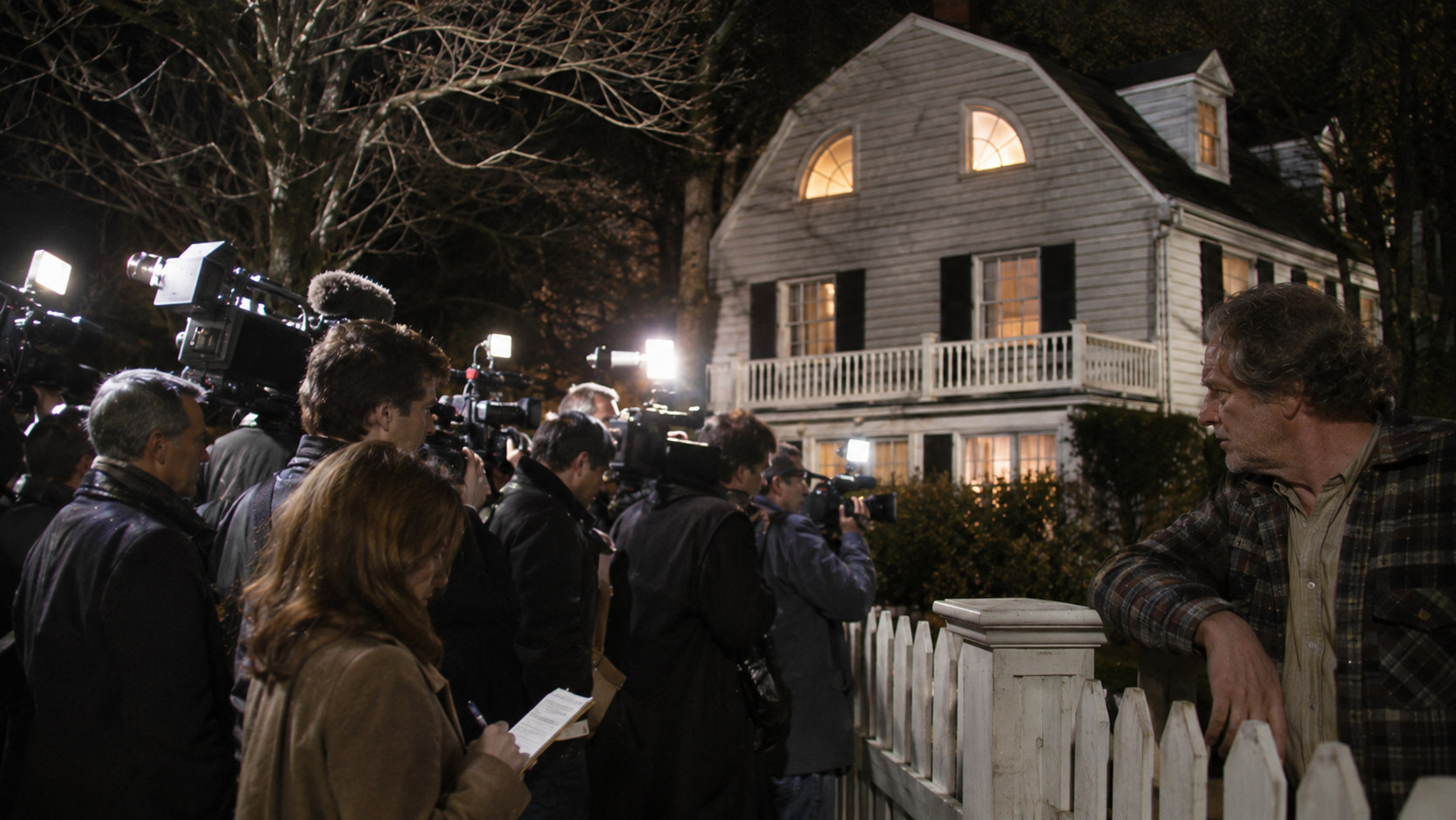
Eventually, the Cromartys had the house number changed in an attempt to discourage visitors. The property’s distinctive windows were also replaced by later owners, although not every alteration was necessarily made because of unwanted attention. Nevertheless, the address change demonstrated how far the Cromartys were prepared to go to enjoy some peace in their own home.
Despite these efforts, the unwanted attention continued. Visitors arrived by bus and boat, creating disruption on the streets and waterways around the property. Neighbours and the wider community were also affected.
A newspaper report from 1979 described unsuccessful attempts to contact the Cromartys for comment. The family had become so reluctant to discuss the house that even reaching them was proving difficult. With the film’s release approaching, the attention was only intensifying.
Of course, it’s understandable why people might be curious about such a place. The house has become part of American popular culture, even if its notoriety originated in a terrible crime.
But there’s a difference between taking an interest in a famous location and treating somebody’s private home as a public attraction. While stopping to look at a house from a public street is one thing, knocking on doors at unreasonable hours, trespassing or harassing its occupants is quite another.
And perhaps that’s what makes the Amityville story so unusual. The people who lived in the house after the Lutzes generally reported little trouble with ghosts. Their problems came from people hoping to encounter them.
The alleged haunting continues to fascinate people decades later, and there are still those who believe something supernatural occurred there. Others remain convinced that the entire affair was exaggerated or fabricated.
Whatever the truth behind the haunting, the house has remained a private residence, occupied by people whose everyday lives have little to do with the stories that made it famous.
And that leaves us with a rather curious question: when a house becomes part of horror history, how much of that history should its occupants be expected to live with?


Leave a Reply