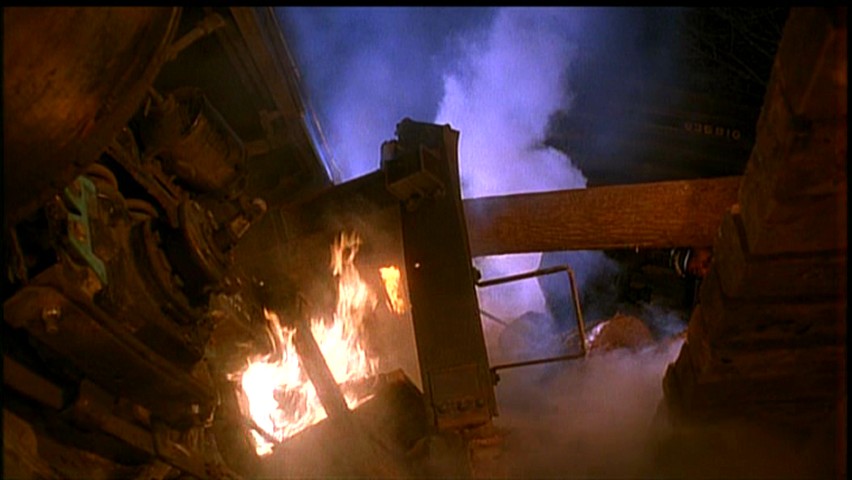
Somewhere in the wreckage of one of cinema’s most spectacular train crashes, a man who wasn’t supposed to be there looks directly into the camera. He appears for only a moment in the 1993 thriller The Fugitive, wearing a baseball cap and peering through the debris. The mistake went unnoticed for years. But what makes his appearance particularly curious is that he was subsequently erased from the film, only to reappear in a later release.
The brief appearance comes shortly after Richard Kimble (Harrison Ford) narrowly escapes a collision between a prison bus and an oncoming train. As Kimble looks up towards the wreckage, a crew member’s head can be seen at the right of the frame. It isn’t part of the story, and apparently nobody involved in editing the film spotted it. The face survived the 1993 cinema release and early home-video editions, including the original DVD from 1997.
But here’s where it gets interesting!
In 2001, Warner Bros digitally erased the mystery man for the Special Edition DVD. Five years later, however, viewers of the 2006 Blu-ray could see him again. At around 18 minutes and 57 seconds, there he was, peering out from the wreckage as though nothing had happened. The explanation was less mysterious than the disappearance: the Blu-ray apparently used an older video master that still contained the mistake.
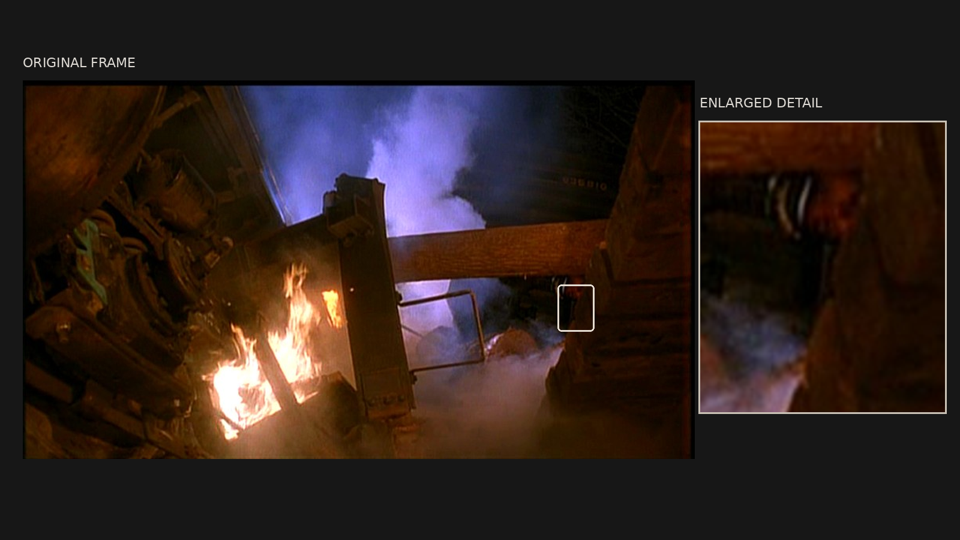
Fast forward to the 20th Anniversary Blu-ray in 2013 and our mystery fella had disappeared again. This time, Warner Bros used a new master with the offending shot corrected. The 2023 30th Anniversary 4K restoration also excludes him. Across different editions of the same film, an accidental glimpse of a real crew member has come and gone.
Perhaps the strangest detail is that Warner Bros actually drew attention to the error. The 2001 DVD included a nine-minute documentary, Derailed: Anatomy of a Train Wreck. During its closing credits, a producer discusses discovering the unwanted face while preparing the new transfer, and the documentary shows the digitally corrected shot. An error that had escaped the filmmakers was suddenly part of the film’s behind-the-scenes history.
The train crash itself is almost as remarkable. Rather than relying entirely on miniature effects, the filmmakers deliberately derailed real locomotives near Dillsboro, North Carolina. Some shots still used models and studio techniques, but the main crash was the real thing. It required ten weeks of planning and could only be performed once. Two retired locomotives were purchased, and a specially built stretch of track guided the derailment.
The stunt happened at 4.14am on a February morning that was described by the film’s cinematographer, Michael Chapman, as “awfully cold.” The crew had held practice runs, but there could be no second attempt at the actual derailment. Around 70 people worked on the second-unit shoot, with several cameras operated remotely because placing an operator close to the tracks was too dangerous for obvious reasons.
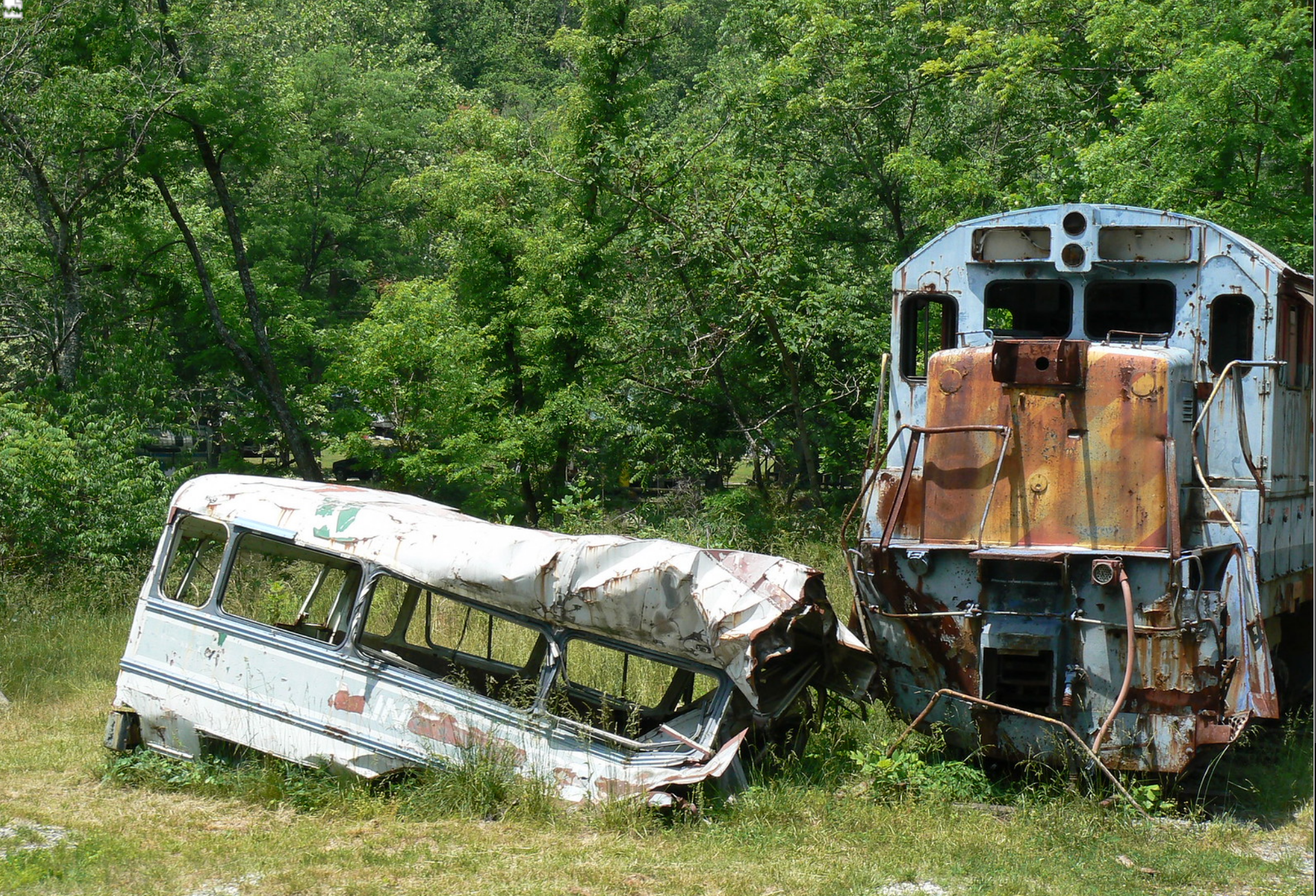
Cameras were positioned in sixteen locations, including aboard the train and inside the bus. One VistaVision camera ended up buried beneath 26 feet of dirt, taking eight hours to recover. Warner Bros had budgeted around a cool $1.5 million for the sequence. The wreckage was left near the railway and became a tourist attraction.
Despite the digital corrections, the original mistake hasn’t vanished entirely. In 2018, Yale Film Archive drew attention to the face when it screened a 35mm print of the film. Audiences watching that print could still spot the man exactly where he appeared in 1993.
That makes the disappearing face an unusual footnote to an already extraordinary piece of cinematic filmmaking. The original crash was captured in a single take, with all its chaos and blemishes. Decades later, home-video technology allowed one of those faults to be tidied away. Yet for anyone watching an original print, the man in the baseball cap is still there.


Leave a Reply